
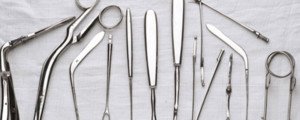
Gynaecology is a medical specialty dedicated to the care of the female reproductive system. Gynaecologists are therefore specialists who address problems related to the uterus, vagina and ovaries — something every woman should be aware of. As such, they must know what the basic instruments for gynaecology are, including all the essentials for the consultation room, such as an examination couch.
Basic instruments for gynaecology
Cutting or incision instruments: Used to make incisions in tissues; they come in different sizes and consist of three parts: blade, handle and heel. There are many ways to hold a scalpel, such as like a pencil or like a knife. The electrosurgical unit is an instrument that generates a high-frequency current, producing cutting and coagulation in tissues. - Scissors: Used for both sharp and blunt dissection. There are several types: - Mayo: These are sturdy scissors with a primarily blunt tip, though some are pointed. Available in sizes of 7, 12 and 23 cm. - Suture-removal scissors: Available in various models; they have a hook-shaped tip that allows them to cut sutures precisely at the point where the tissue has been sutured. - Iris scissors: These are small and can be straight or curved; they are used for delicate cuts such as on veins, arteries or during dissection. Available in sizes of 9, 11 and 5 cm. - Curettes: These instruments have a handle and end in a spoon shape; one end may be fenestrated or both can be. Some curettes are malleable and are used for the biliary tract.
Haemostatic instruments: These are essential for compressing points of haemorrhage. The tip of the instrument grasps the bleeding vessel with a minimal amount of surrounding tissue, allowing it to be ligated. There are many models of haemostatic clamps, whether straight, curved, short or long. For example: - Haemostatic forceps with rat-tooth tips. - Angled haemostatic forceps.
More instruments for your gynaecology centre
Traction forceps: Used when tissues must be held securely to allow access to the interior without rubbing against surrounding tissues. They can be straight or curved. The most important ones for basic gynaecological instruments are: - Faure forceps: Long and curved, with a short jaw and curved teeth. - Museux forceps: Long, with four teeth — two teeth on each jaw. - Tissue grasping forceps. - Field or wound forceps: Normally used to hold sterile drapes.
Retraction instruments: Retractors come in different sizes and are rigid. They are available in various sizes to suit different anatomical areas. The most commonly used are: - Richardson retractors: These have a handle and a retractor blade. - Roux retractor: A double retractor. - Vascular retractors: These are narrow, with curved or straight blades, and are used to separate nervous or vascular structures. Malleable retractors: These have automatic blades; they are flexible and can therefore be adapted and shaped as needed.
Suture instruments: Depending on the shape of the arms, these can be straight, curved, angled or bayonet-shaped. Toothed forceps grip better and are used to hold tissues such as skin. There are several types used depending on the type of dissection to be performed. - Needle holders: Similar to haemostatic forceps, but more robust, with a wide, flat cross or jaw to hold needles firmly. - Vaginal speculum - Uterine dilators - Cervical forceps - Uterine curettes - Uterine forceps
Aspirators: Used to aspirate the collections that form in the surgical field. They consist of a tube that suctions via negative pressure and aspirates the various materials.
These are the most important instruments to have everything you need in your gynaecology centre, and at Salvador Navarro you will find everything you need to complete your consultation room.