
Measuring vital signs requires having reliable patient monitoring equipment in your clinic or healthcare facility. It is also a key consideration when transporting patients whose condition must be tracked at all times. Nursing assistants and physicians can stay informed about each patient’s status in real time.
Patient monitoring equipment is designed to be used intuitively and quickly. That is why we need these small computers to make things as easy as possible, leveraging the latest technological advances to improve the quality of healthcare delivery. In this article, we offer some tips to help you make the right choice when purchasing patient monitoring equipment for your clinic or facility.
Types of Monitors and Their Uses
If you are looking for a bedside monitor, the most notable options currently on the market are those that offer flexible and integrated modules. They are powerful, easy to transport, and suitable for any hospital or healthcare area.
There is a range of monitors that provides a very straightforward multi-gas monitoring unit, such as the DS-7000 model, and a carbon dioxide unit, ideal for intensive care. For something highly powerful at a competitive price, the DYNASCOPE DSL-8 range is an excellent option.
Among DYNASCOPE patient monitoring equipment — currently the most prominent on the market — you will find central monitors for patient vital signs. They offer a large screen and a multi-screen configuration, allowing all the necessary information to be viewed at a glance.
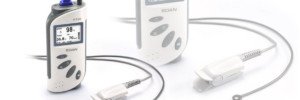
For pulse oximetry equipment, the H100B, H100N, and H10 models from EDAN are excellent choices. All of them feature an advanced SpO₂ system, a plethysmogram display, multi-directional screen, and high storage capacity.
If you are looking for patient telemetry monitoring equipment, we also recommend the EDAN range. The most in-demand model is the IT20, a Wi-Fi network-based telemetry transmitter with standard ECG monitoring functionality and optional pulse oximetry.
Most Important Features of Patient Monitoring Equipment
When acquiring one of these technical devices, it is important to consider how some of its components and features work. As mentioned above, you may need to connect or activate a function urgently in a matter of seconds, which is why you need equipment where everything operates simply and smoothly.
Cuff Connectors
When deciding how to monitor your patients, one very important consideration is the connector layout on the device you are purchasing. They should be positioned in a way that does not obstruct the work of healthcare staff, while remaining easily accessible.
Some monitors feature connectors on the front lateral side, which can be very practical.
Blood Pressure Cuff
Blood pressure is the most important parameter measured by a patient monitoring device. In this case, you should choose the one that best suits your preference and space, as most models are presented in a similar format.
The cuff is placed on the arm, above the elbow fold.
Our Electromedical Equipment
At Salvador Navarro, we work with the best national and international suppliers to offer our clients the most innovative and functional products. We encourage you to explore our range of electromedical equipment, which includes patient monitoring devices, diagnostic equipment, gynaecology products, and much more.